
One-Stop IoT Solutions Provider
In-house R&D Team | Custom Features | 15 Years+ Global Service Cases | Technical Support
Applicable Industries




Application Scenarios



Discover how IoTS tackles everyday challenges.
Application Scenario
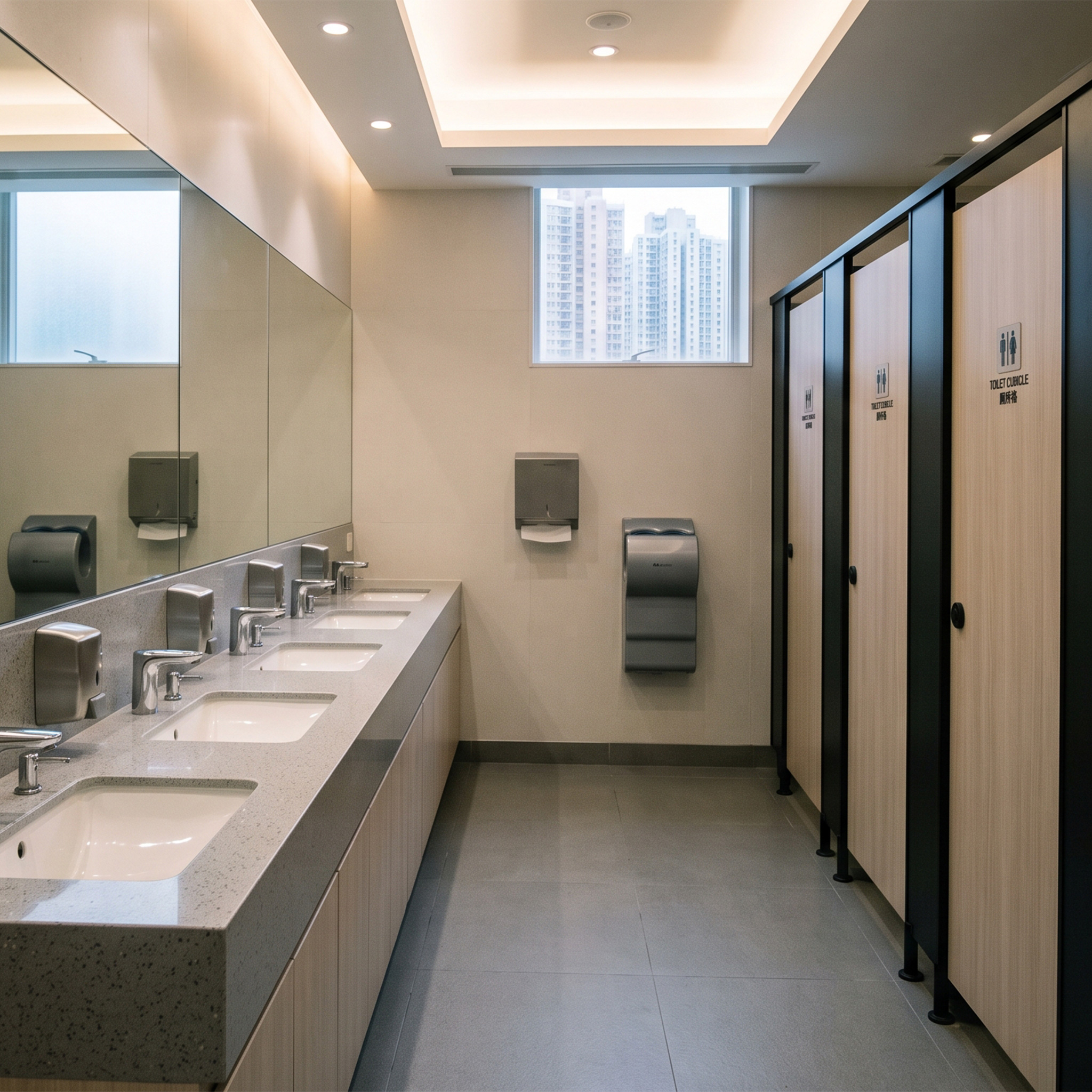
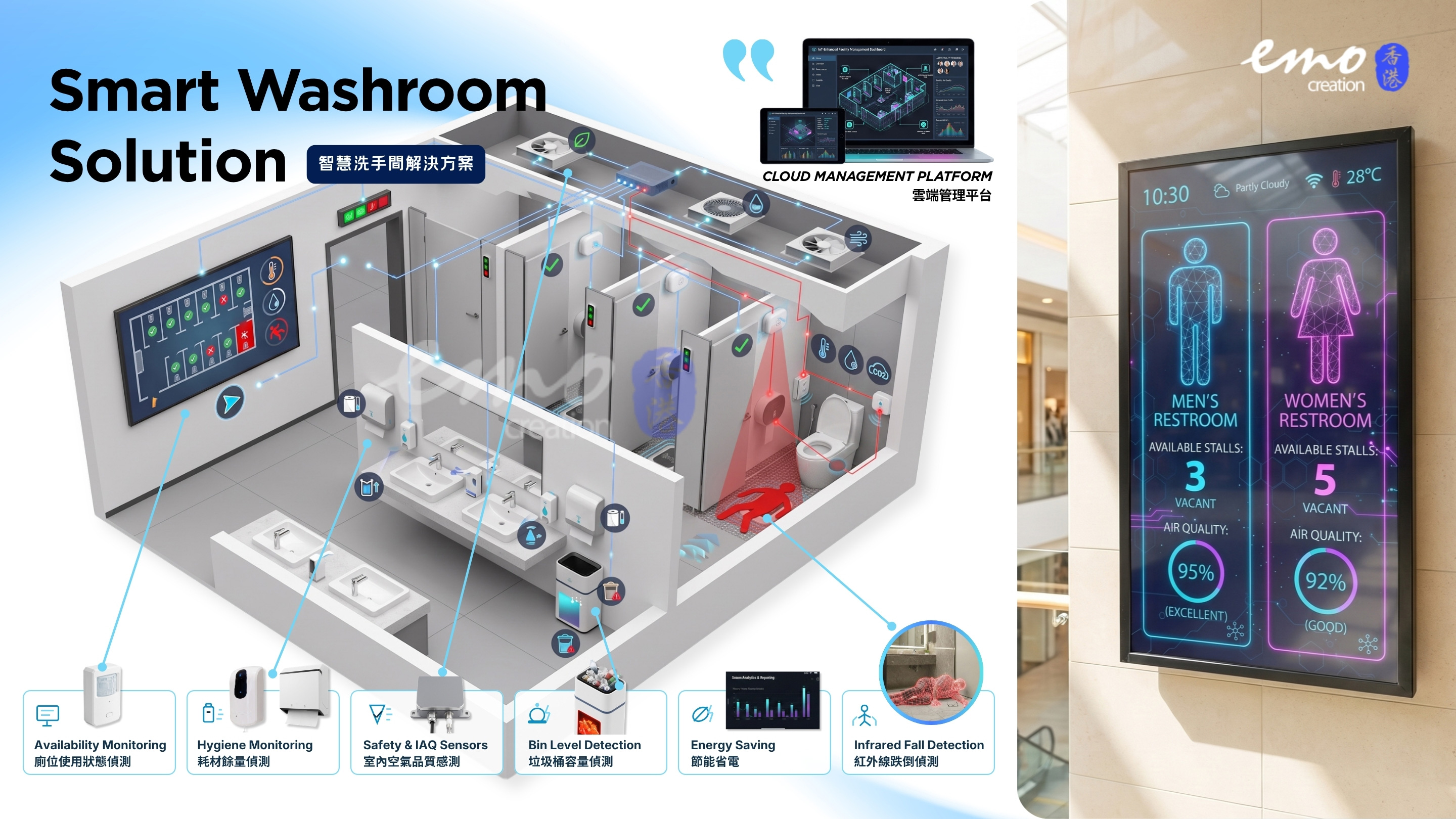
The system features fall detection and automated monitoring for consumables—like soap, paper towels, and trash capacity—to ensure timely replenishment. By also tracking temperature, humidity, and air quality, it maintains a consistently clean, safe, and comfortable restroom environment for all users. Real-time restroom occupancy status (occupied/vacant) is displayed at the entrance to minimize waiting times and improve user flow.
Module Features Summary:
⍟ Hygiene Monitoring ⍟ Safety & IAQ Sensors ⍟ Restroom Availability Monitoring ⍟ Real-Time Alerts ⍟ Energy Saving ⍟ Infrared Fall Detection ⍟ Bin Level Detection
The system dynamically adjusts AC settings and fan speeds based on real-time occupancy and temperatures. It automatically shuts off lights and HVAC in empty rooms and triggers alerts for equipment faults to prevent performance drops and energy waste.
Module Features Summary:
⍟ Air Monitoring ⍟ Safety & IAQ Sensors ⍟ Lighting Control ⍟ People Sensing ⍟ Real-Time Alerts ⍟ Energy Saving ⍟ Pipe & Fire Pressure
Internet-of-Things solutions always come with a system of connected hardware, and software.
Our 2 Primary Solutions
01. Digital Twin System
Digital Twin System enables “real-time synchronization” in a digital environment through real-time data feedback and analog technology, thereby supporting monitoring, diagnosis, and prediction.
By integrating building information models and IoT sensors, the system can achieve energy savings of up to 20% to 30%.
HVAC system optimization:
The system dynamically adjusts the cooling water temperature and fan speed based on real-time pedestrian flow, indoor and outdoor temperature, humidity, and carbon dioxide concentration.
✓ Expected energy saving effect:
After integrating digital doppelgangers to optimize HVAC, a large office building successfully reduced energy consumption by 25%.
Smart lighting control:
Occupancy Detection: combined with AI algorithms, automatically turns off lights and air conditioning in unoccupied rooms.
It senses the intensity of natural light and automatically adjusts motorized blinds and light brightness to maximize the use of natural light.
✓ Expected energy saving effect:
By using digital avatars to monitor energy usage in the store, nearly 30% of energy consumption has been successfully saved.
Fault Warning:
Virtual Diagnostics: Maintenance personnel can view the operating status of pipelines through the interface, quickly locating energy leaks or the causes of equipment inefficiency.
Predictive Maintenance: The system issues alerts before equipment failure leads to performance degradation (and wasted electricity), ensuring that equipment is always in optimal energy efficiency.
✓ Expected energy saving effect:
The additional 10% – 15% savings on top of automation mainly come from avoiding inefficiencies caused by equipment “operating with defects”.
Module Features Summary:
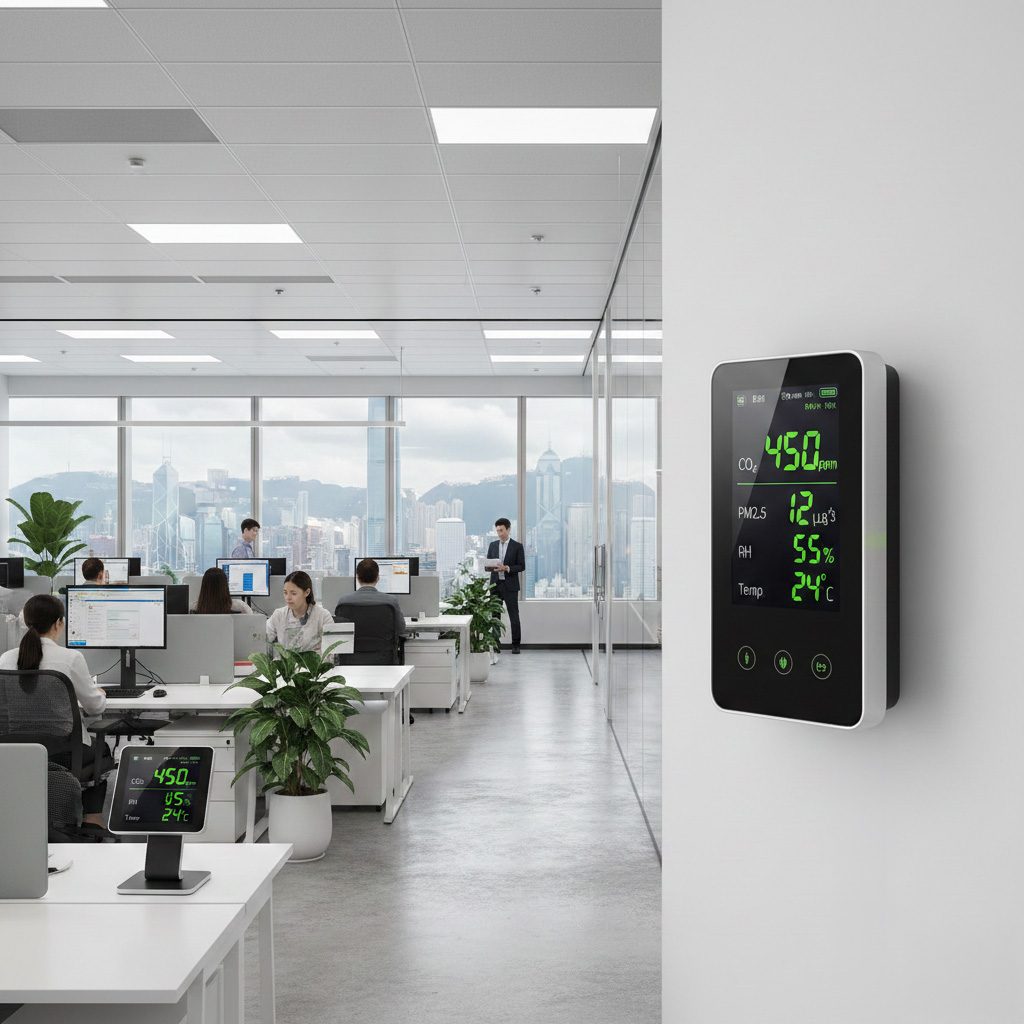
Air Monitoring
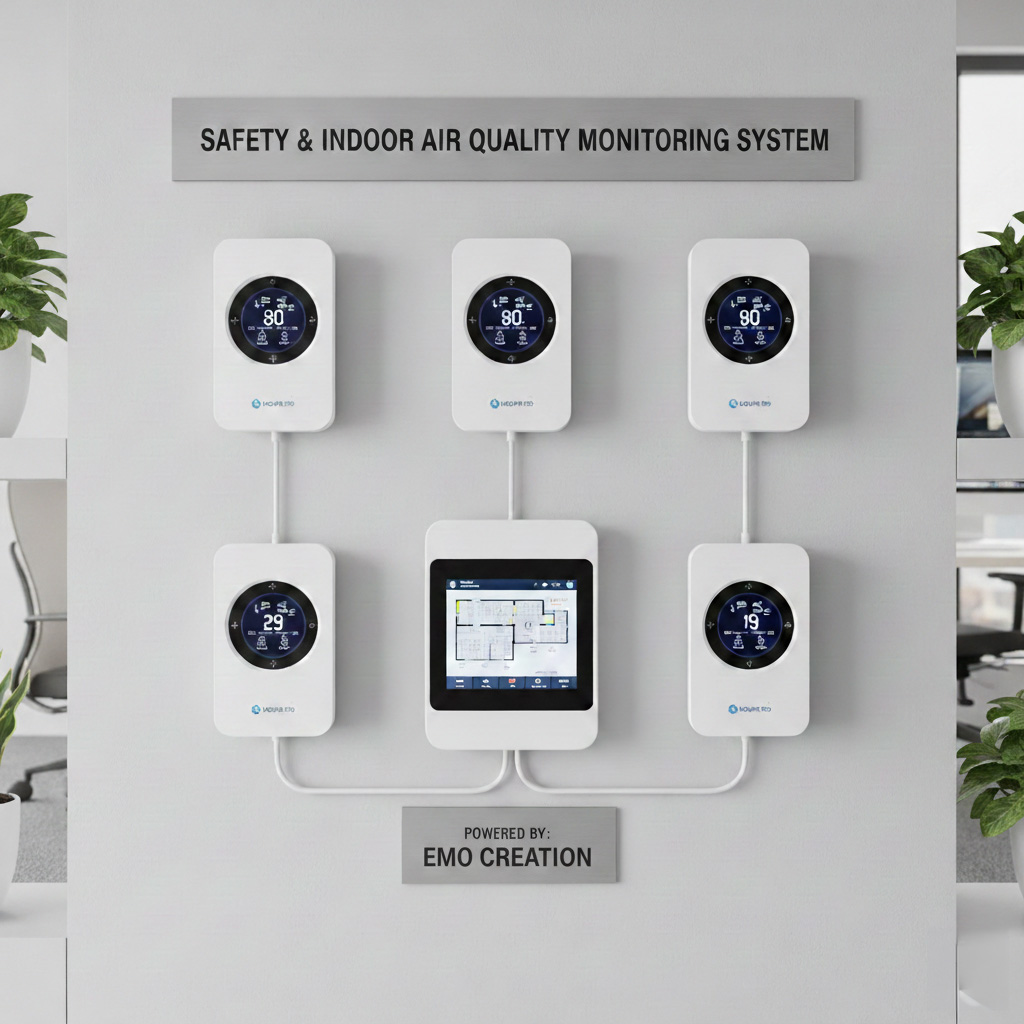
Safety & IAQ Sensors
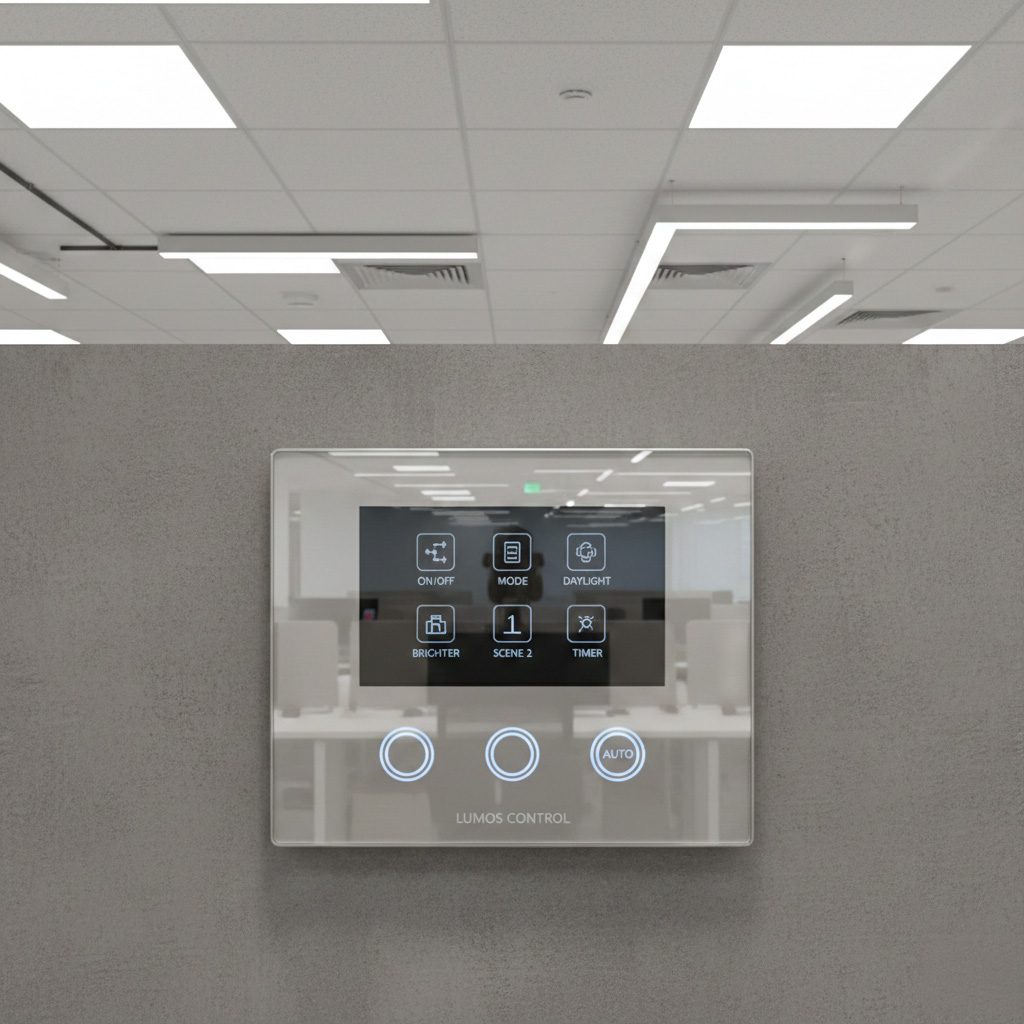
Lighting Control
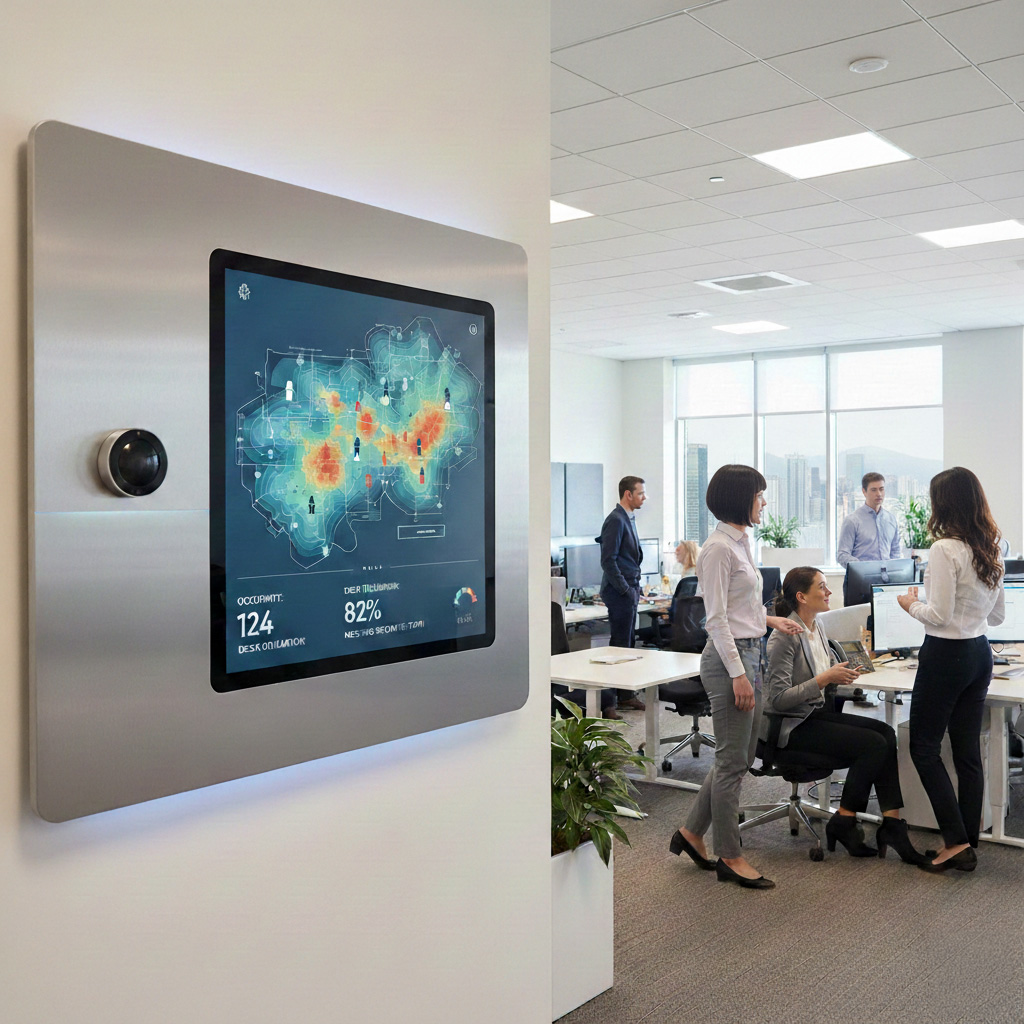
People Sensing
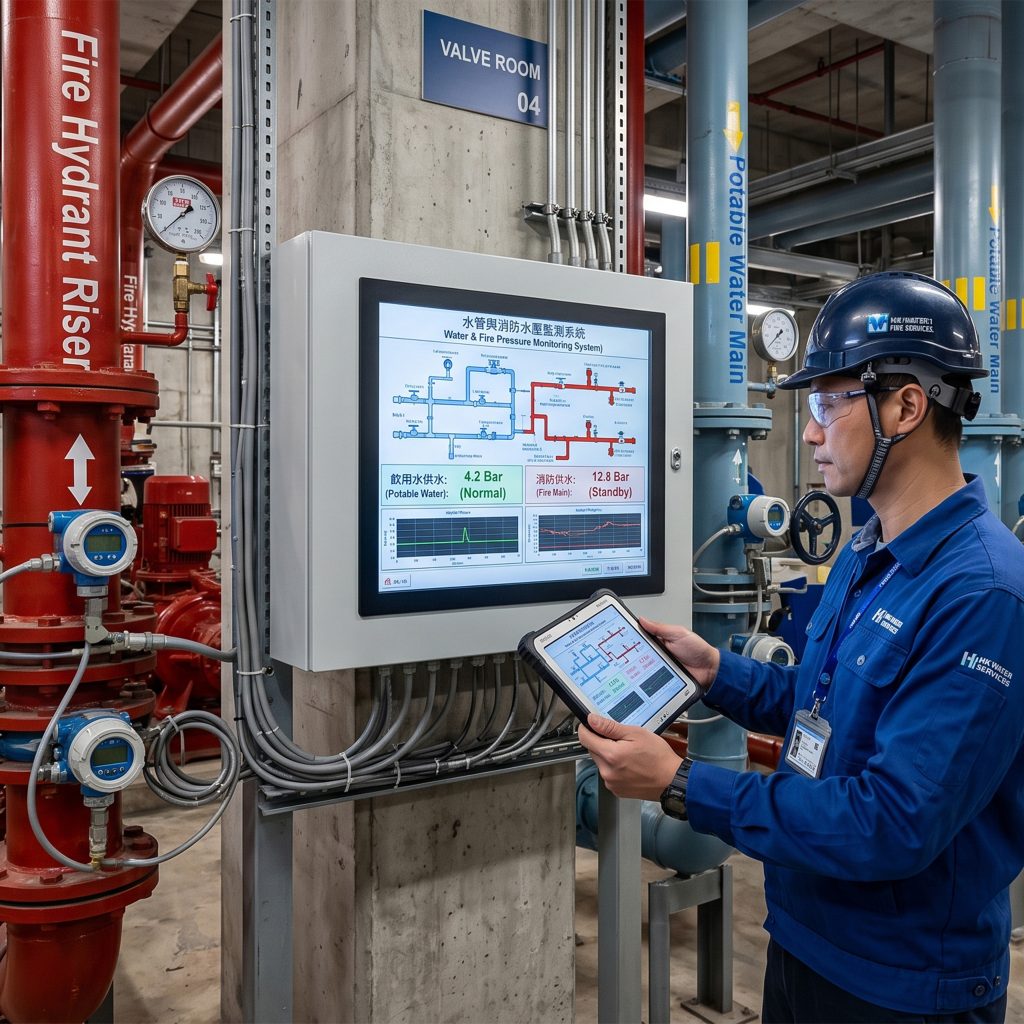
Pipe & Fire Pressure
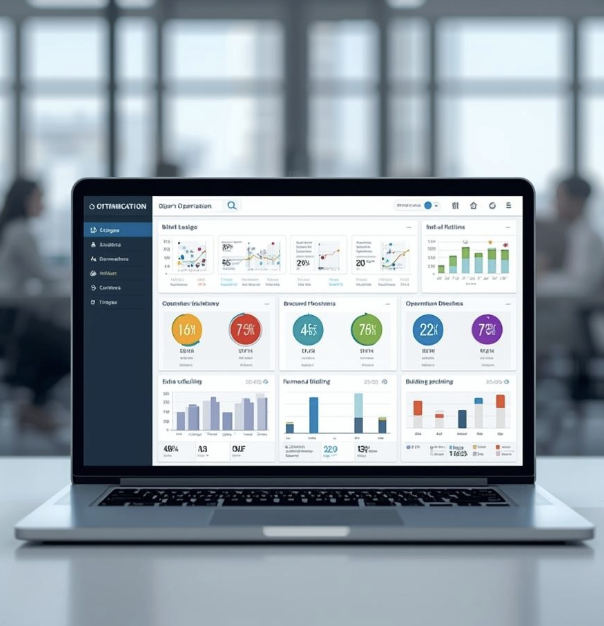
Energy Saving
02. IoT Smart Washroom Solution
Our Smart Washroom System is a holistic IoT platform designed to digitize facility management. By automatically detecting consumable levels and environmental conditions, the system enables timely replenishment and data-driven cleaning, ensuring a pristine and safe environment for all users.
All-in-One Sensor Ecosystem:
-
Soap: Monitors levels to ensure constant supply.
-
Paper: Tracks usage for timely restocking.
-
Waste: Alerts on bin capacity to prevent overflow.
✓ Environment & Safety:
-
IAQ Sensor: Tracks temp, humidity, and air quality index.
-
Fall Detection: Detects falls and triggers immediate emergency alerts.

Centralized Management Dashboard:
-
Anywhere Access: Live dashboard for mobile and PC.
-
Proactive Alerts: Visual tracking of supply levels and battery life.
-
Team Sync: Zone-based updates for coordinated maintenance.
✓ Operational Efficiency:
- Supports the automatic detection of remaining consumables, facilitating “Just-in-Time” replenishment and cleaning schedules.
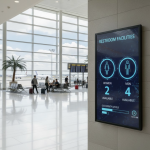
Smart Digital Signage (Public Display):
-
Live Occupancy Map: * Real-time Status: Displays a digital layout showing Vacant/Occupied cubicles.
-
Efficiency: Reduces waiting times through instant visibility.
-
Environmental Data (IAQ Monitoring): Displays live temperature and humidity (customizable).
-
Location Services: * Dynamic Navigation: Guides users to the nearest available washroom based on current facility levels.

Smart Notification & Alert System:
-
Multi-Channel Alerts: * Instant Notifications: Real-time alerts via Web, Email, or IM Apps.
-
Full Coverage: Covers abnormal signals, sensor faults, and low battery.
-
Customizable Thresholds (Fine-tuned Triggers): Set specific limits (e.g., Soap < 10% or IAQ limits) for each sensor.
-
Admin Control: Flexible management tailored to facility needs.
✓ Expected energy saving effect:
-
Instant Anomaly Alerts: Notifies if HVAC/machinery is left on after hours or malfunctions.
-
Power Spike Detection: Identifies energy leaks and usage spikes for immediate fixes.
-
Demand-Controlled Ventilation (DCV): Replaces 24/7 operation with threshold-based triggers (CO2/Temp/Humidity).
Module Features Summary:
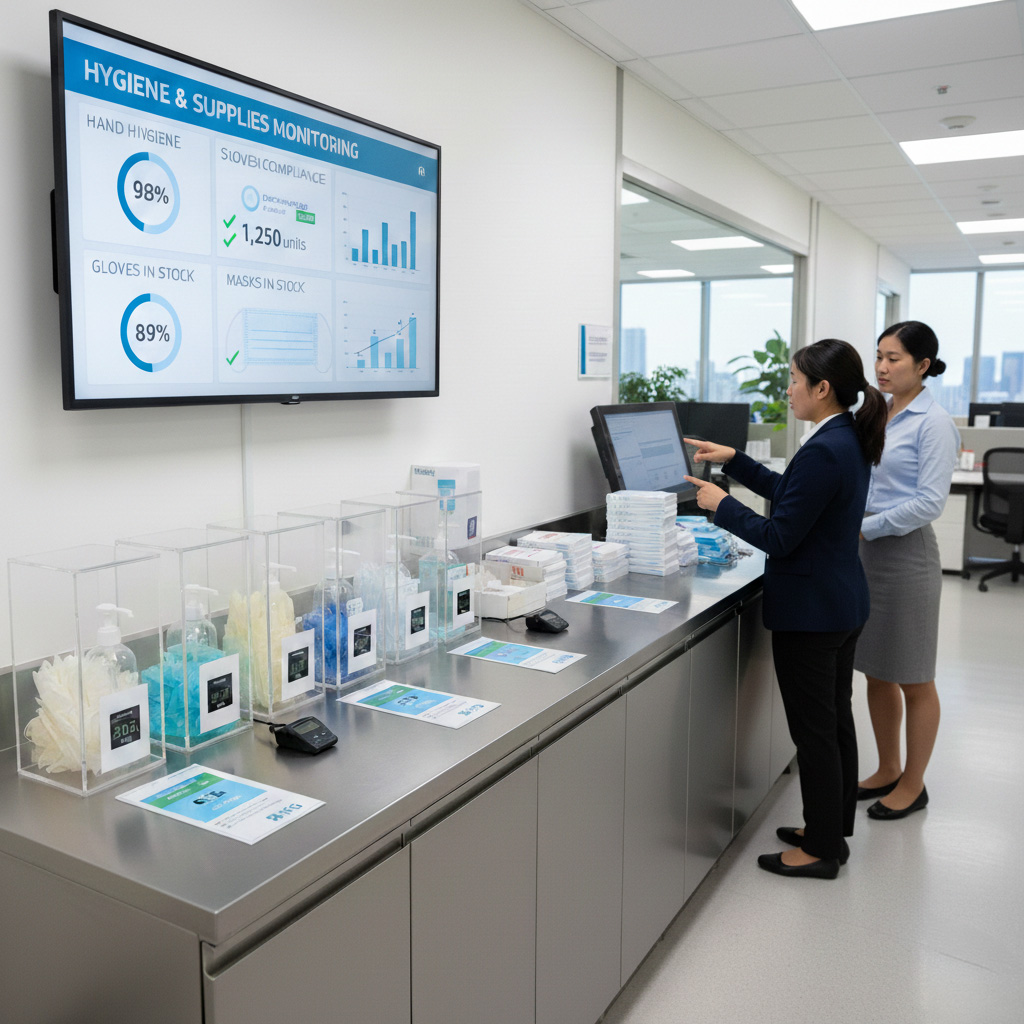
Hygiene & Supplies Monitoring
Safety & IAQ Sensors
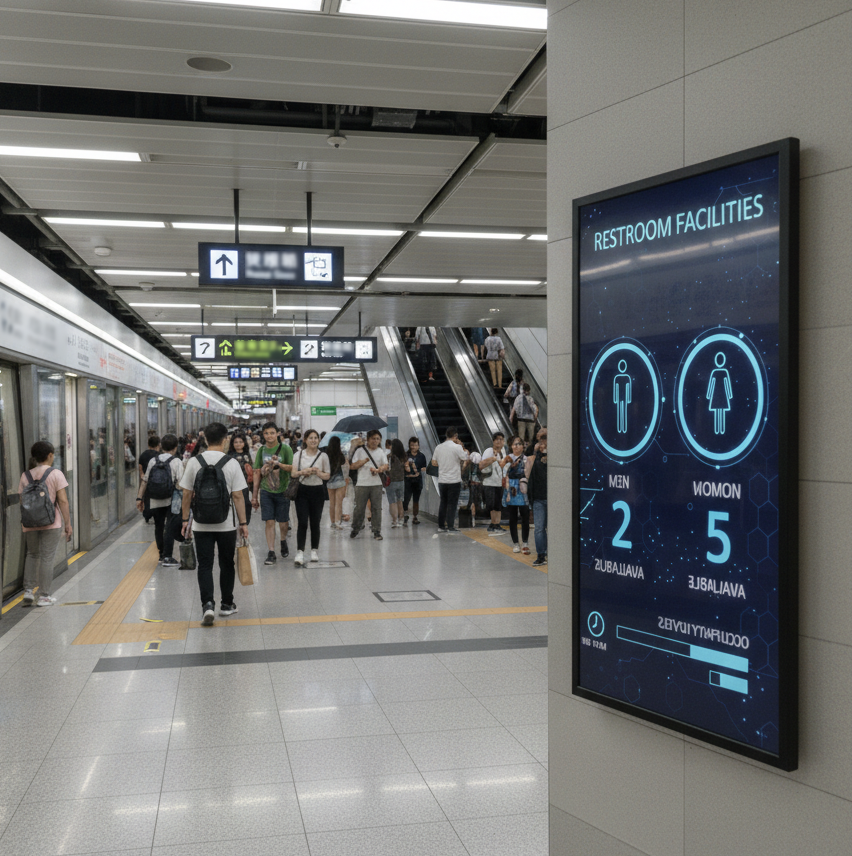
Public Displays
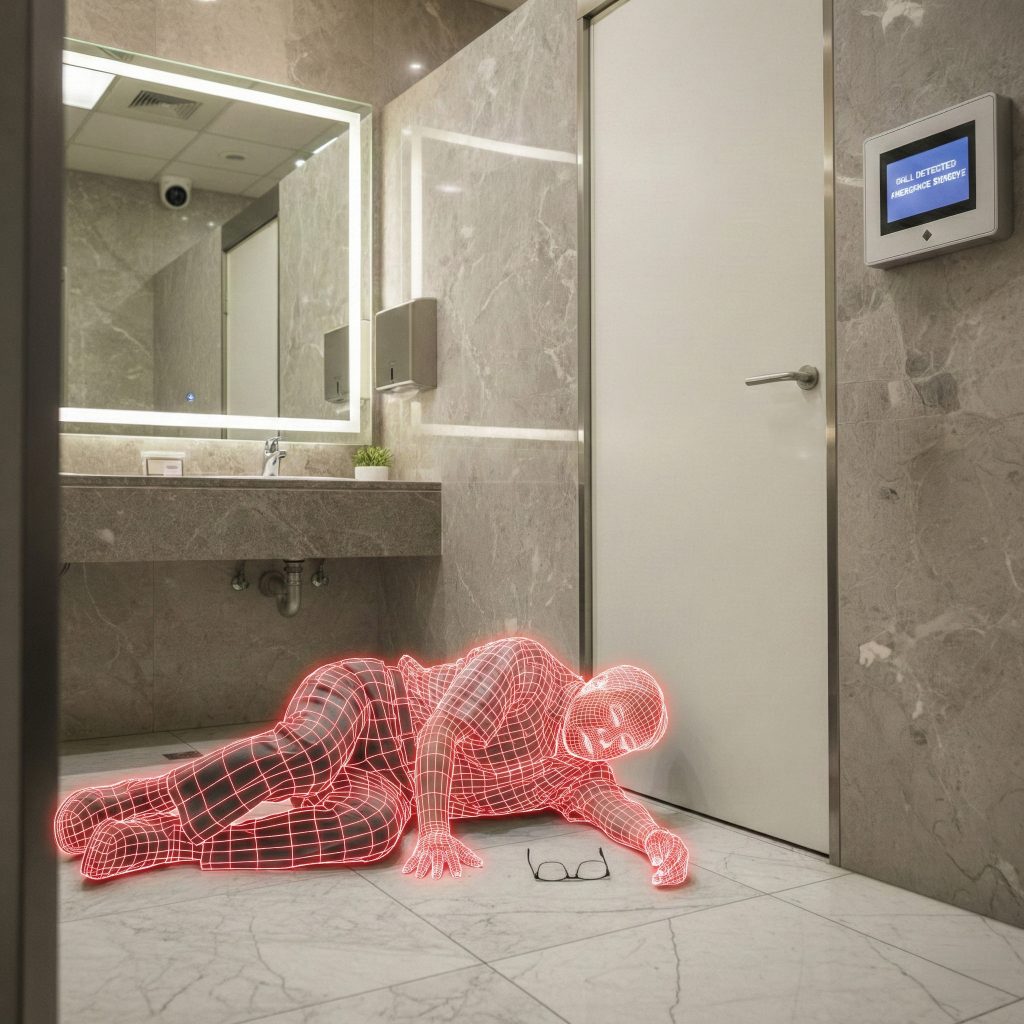
Infrared Fall Detection

Real-Time Alerts
Energy Saving
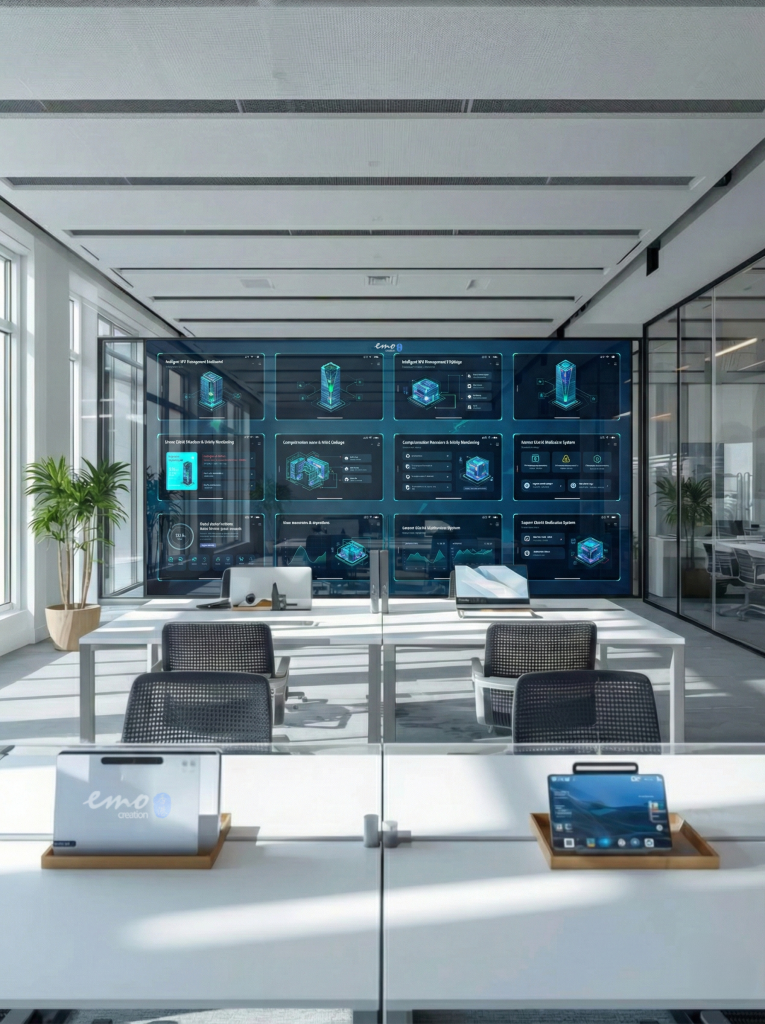
IoT solutions for public and commercial spaces.
Key Components of an IoT System






Your Ultimate loT Partner
EMO CREATION LIMITED is a pioneering Hong Kong-based technology firm that has dedicated over 15 years to developing innovative IoT solutions for public and commercial spaces.
EMO CREATION LIMITED provides a comprehensive end-to-end service model, ensuring seamless consultation, design, installation, and ongoing maintenance tailored to our clients’ unique needs.
EMO CREATION LIMITED integrates cutting-edge AI algorithms and cloud technologies to enhance IoT functionality, ensuring real-time data processing and user-friendly accessibility through platforms like WeChat.
FAQ
What is a Smart Office?
A Smart Office leverages advanced technologies such as the Internet of Things (IoT), sensors, and software to enhance workplace efficiency and employee productivity. Key components include:
-
Internet of Things (IoT): Enables the control of smart devices and systems within the office (such as lighting, climate control, and access control) through smart office IoT solutions.
-
Machine Learning: Provides data-driven insights to optimize workplace configuration and support strategic decision-making.
How do Smart Office solutions benefit businesses?
Benefits include increased operational efficiency, reduced energy consumption and costs, optimized resource management and productivity, enhanced security features, and the promotion of a sustainable, eco-friendly office environment.
What are the advantages of Digital Transformation?
Digital transformation streamlines processes through automation, enhances customer experience using data insights, and improves collaboration via integrated tools, enabling businesses to remain competitive in a dynamic market.
How can Digital Transformation Consultants help build a Smart Office?
Digital transformation consultants provide expert guidance to tailor smart office technology implementation to your business needs. We conduct a detailed assessment of existing systems and recommend the best solutions to ensure a smooth transition to a smart office environment.